

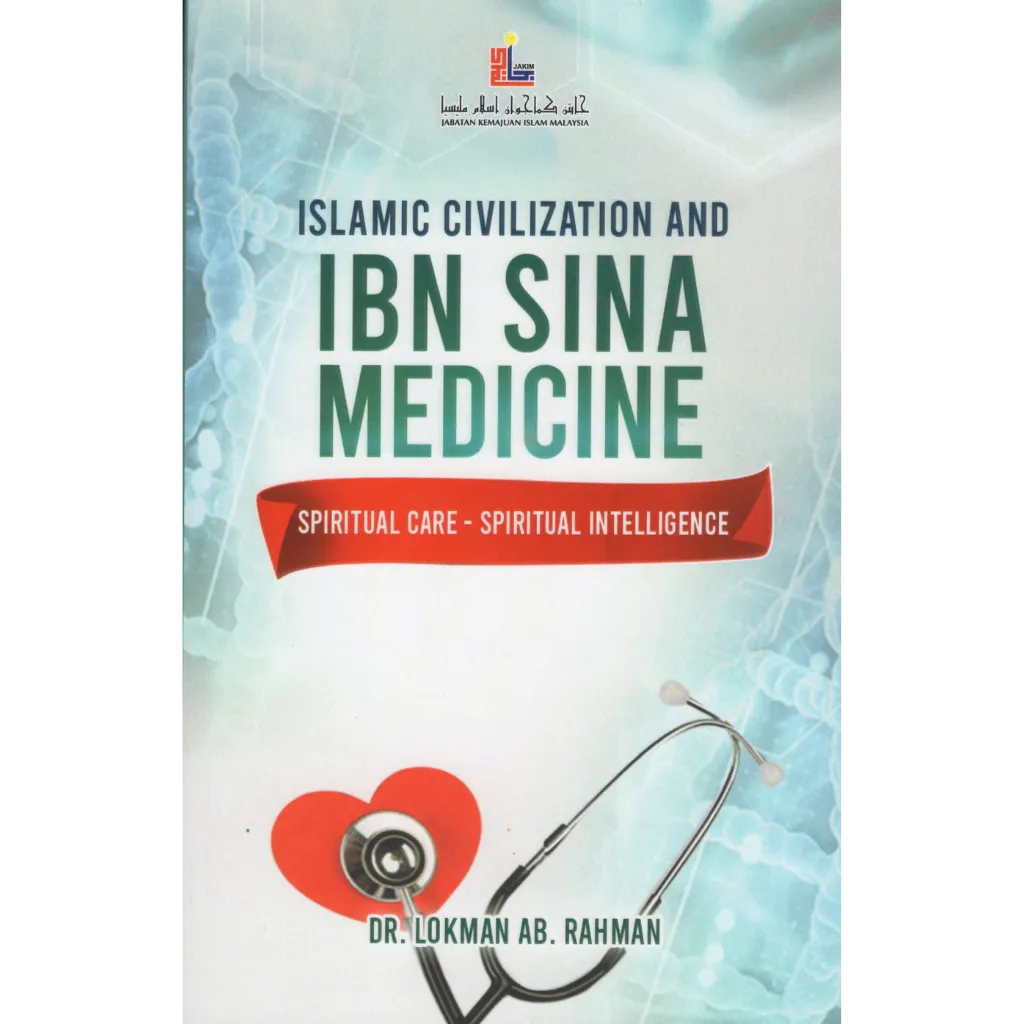
Islamic Civilization and Ibn Sina Medicine: Spiritual Care - Spiritual Intelligence
- Regular price
- RM 18.00
- Sale price
- RM 18.00
- Regular price
-
RM 18.00



Share
Islamic Civilization and Ibn Sina Medicine: Spiritual Care - Spiritual Intelligence
Author: Dr. Lokman Ab. Rahman
Publisher: JAKIM
ISBN: 9789830427348
Weight: 170 g
Pages: 143 pp
Year: 2025
Price: RM18
Civilization is an evolving process and the product of human curiosity which compels man to acquire greater knowledge both for its own sake and its applications. Knowledge leads to technology which, Arnold Toynbee rightly points out, is "coeval with man". The term civilization was first used in the 18th century. Until that point, Europeans may not have had a clear perception of civilization. However, the 14 century Islamic historian Ibn Khaldun coined the term umran to explain in detail what we now understand as civilization. Ibn Khaldun's book on civilization was known as al-Muqaddimah li-Kitab al-'Ibar. A civilized society possesses a number outstanding of characteristics, such as a well-organized state, codified system of law, well-organized city-life, a developed system of writing (script), fine art and architecture, to name a few. Ibn Khaldun's study of civilization was called al-'umran. The concept of civilization formulated by prominent Western scholars is similar to the concept of umran outlined by Ibn Khaldun. For example, Edward B. Taylor (1832-1917) stated in his major work Primitive Culture (1817), "Culture or Civilization is that complex whole which includes custom and any other capabilities and habits acquired by man as a member of society". Burnett Hillman Streeter in his conclusion stated that the civilization is the result of three features: intelligence, energy, and goodwill. This chapter discusses the outstanding characteristics of Islamic civilization in terms of the important aspects of tawhid, Shari'ah, assimilation, education, humanism, and dissemination.