

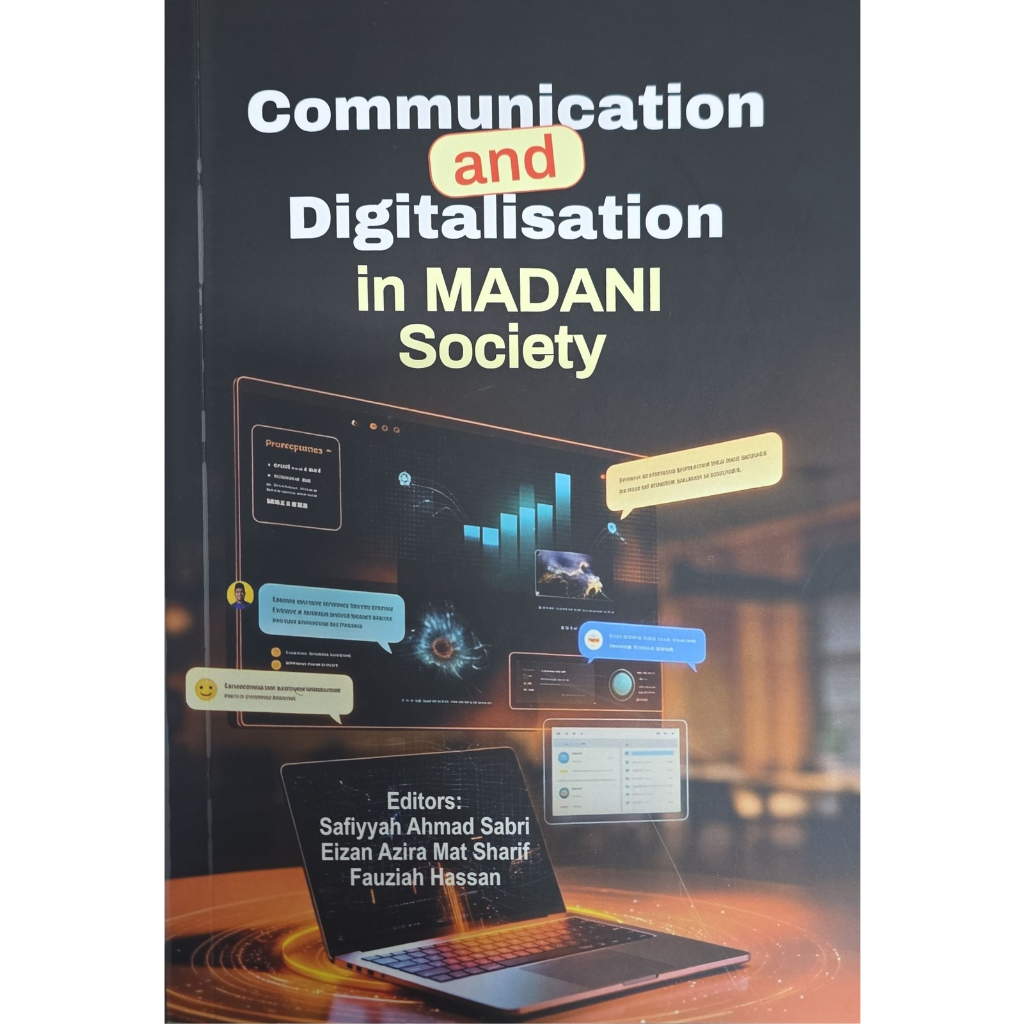
Communication and Digitalisation in MADANI Society
- Regular price
- RM 65.00
- Sale price
- RM 65.00
- Regular price
-
RM 65.00



Share
Communication and Digitalisation in MADANI Society
Editors: Safiyyah Ahmad Sabri, Eizan Azira Mat Sharif, Fauziah Hassan
Publisher: Penerbit USIM
Format: Paperback
ISBN: 9786297863702
Pages: 296pp
Weight: 442g
Year: 2026
Price: RM65
This book explores the dynamic interplay between communication, digitalisation, and the ethos of a Madani society, characterized by ethical citizenship, inclusivity, and sustainable development. It examines how various forms of communication and digital technologies influence identity, governance, and social transformation within the Malaysian context. The narrative begins with an exploration of identity, focusing on the effects of diaspora and digitalisation on belonging. It emphasizes the importance of sustainable environmental communication, balancing compassion and passion, while critically evaluating the ethical implications of artificial intelligence in contemporary discourse. The role of social media in governmental engagement is also highlighted. The book addresses pressing challenges such as misinformation, providing Islamnic insights on fake news and navigating the ethical dilemmas faced by journalists in the digital realm. It discusses the legal landscape of digital journalism in Malaysia, celebrates press freedom, and advocates for transparency through data journalism. The significance of fact-checking and editorial integrity in fostering democratic values is explored, particularly in the age of Al. In the broadcasting sector, the challenges and opportunities posed by artificial intelligence in content production are examined, alongside the transformative potential of Al in the film industry through case studies that navigate themes of faith and diversity. Finally, the book investigates social media's role in shaping community culture and mobilizing social change, especially among Muslim youth. It addresses youth well-being in a digital landscape, the influence of new media on public discourse, and the effectiveness of digital marketing strategies. Strategic frameworks for fostering social harmony and transforming domestic tourism are also presented. By integrating diverse perspectives and critical analyses, this book aims to illuminate the potential of communication and, digitalisation as catalysts for promoting the values of a Madani society. It serves as an essential resource for scholars, practitioners, and policymakers seeking to navigate the complexities of modern communication and its implications for ethical and inclusive development.