

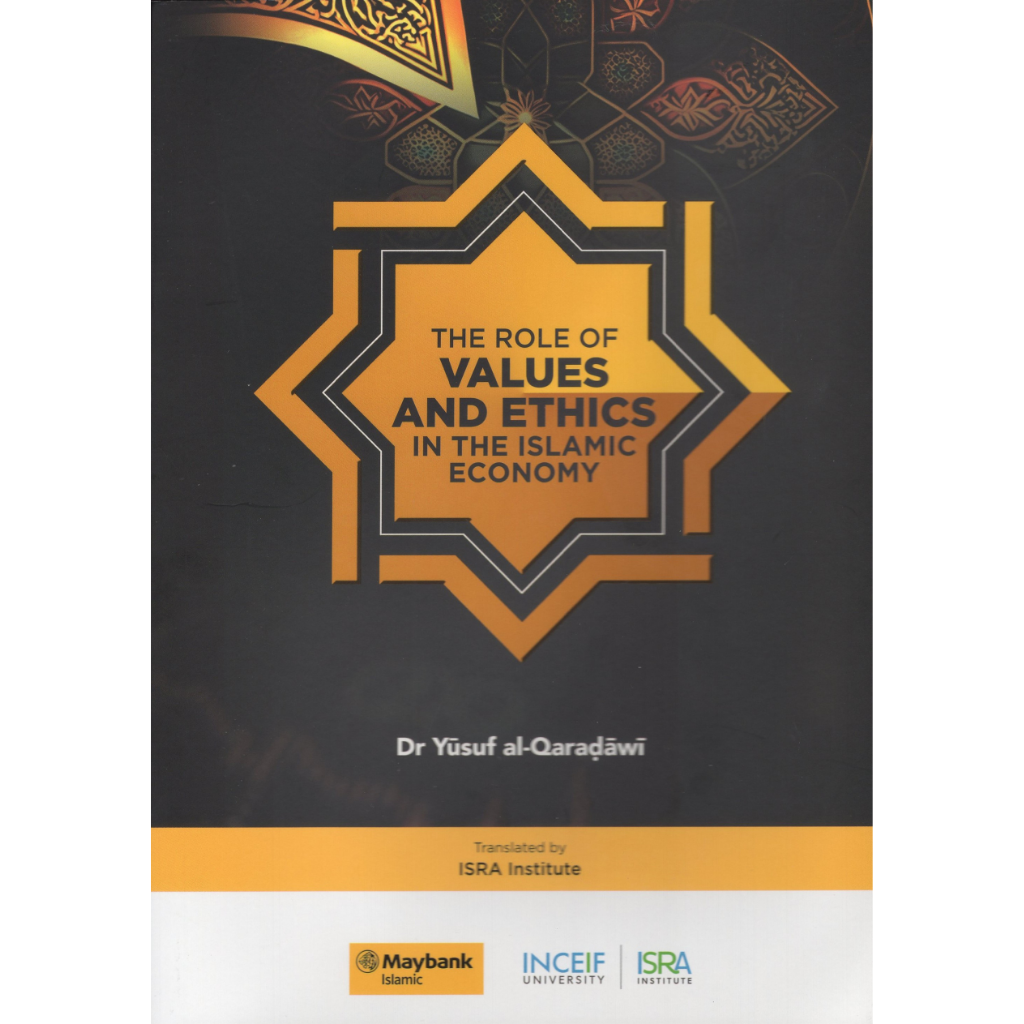
The Role of Values and Ethics in The Islamic Economy
- Regular price
- RM 77.00
- Sale price
- RM 77.00
- Regular price
-
RM 77.00



Share
The Role of Values and Ethics in The Islamic Economy
Author: Tan Chee-Beng
Publisher: Isra Publication
ISBN: 9789833729456
Weight: 730 g
Pages: 370 pp
Year: 2025
Price: RM77
The Role of Values and Ethics in the Islamic Economy, by Dr Yusuf al-Qaradawi is the third book sponsored by Maybank Islamic Berhad with the intent of helping English-speaking Muslims and non-Muslims understand the Islamic view on issues related to economics. The Muslim world continues to grapple with the Effects of five centuries of colonial incursions on its lands, a process that has thoroughly reshaped Muslim economies, Muslim minds and Muslim behaviour. In this book, Sheikh al-Qaradawi provides a 'map' to help Muslim effectively cope with the situation in which they find themselves. He clarifies that Islam provides a middle path between ascetic denial of the world and the idea that 'whoever dies with the most toys wins'. This world is an arena prepared by God as a testing ground for an eternal afterlife. Allah placed all kinds of resources in it with the expectation that human beings will use them to develop this temporary abode. The issue is: by what means, and for what purpose? Sheikh al-Qaradawi sets out systematically answer these two questions by discussing what makes Islamic economics unique; the impact of values and ethics on production, consumption and distribution; and the role of the state in the Islamic economy.
A study by two Muslim professor at George Washington University in 2010, titled 'An Economic IslamicityIndex (EI2)', provides a compelling reminder of why this book is very important. Using a set of criteria drawn from Islamic principles, including justice and morality, property rights, sanctity of contracts, treatment of workers and freedom from corruption proposed in the study, the Islamicity Indices website has published 'Islamicity Ranking' since 2015. The indices measure four key dimension: economic, legal and governance, human and political rights, and international relations. In 2002, the highest-ranking demographically Muslim country was Malaysia, at number 43; that means 42 non-Muslim countries ranked higher than the best Muslim country. While the methodology of the indices might be subjected to rigorous questioning, 'You don't need a weatherman to know which way the wind blows'. Muslim would do well to read this book to begin addressing this troubling situation.