

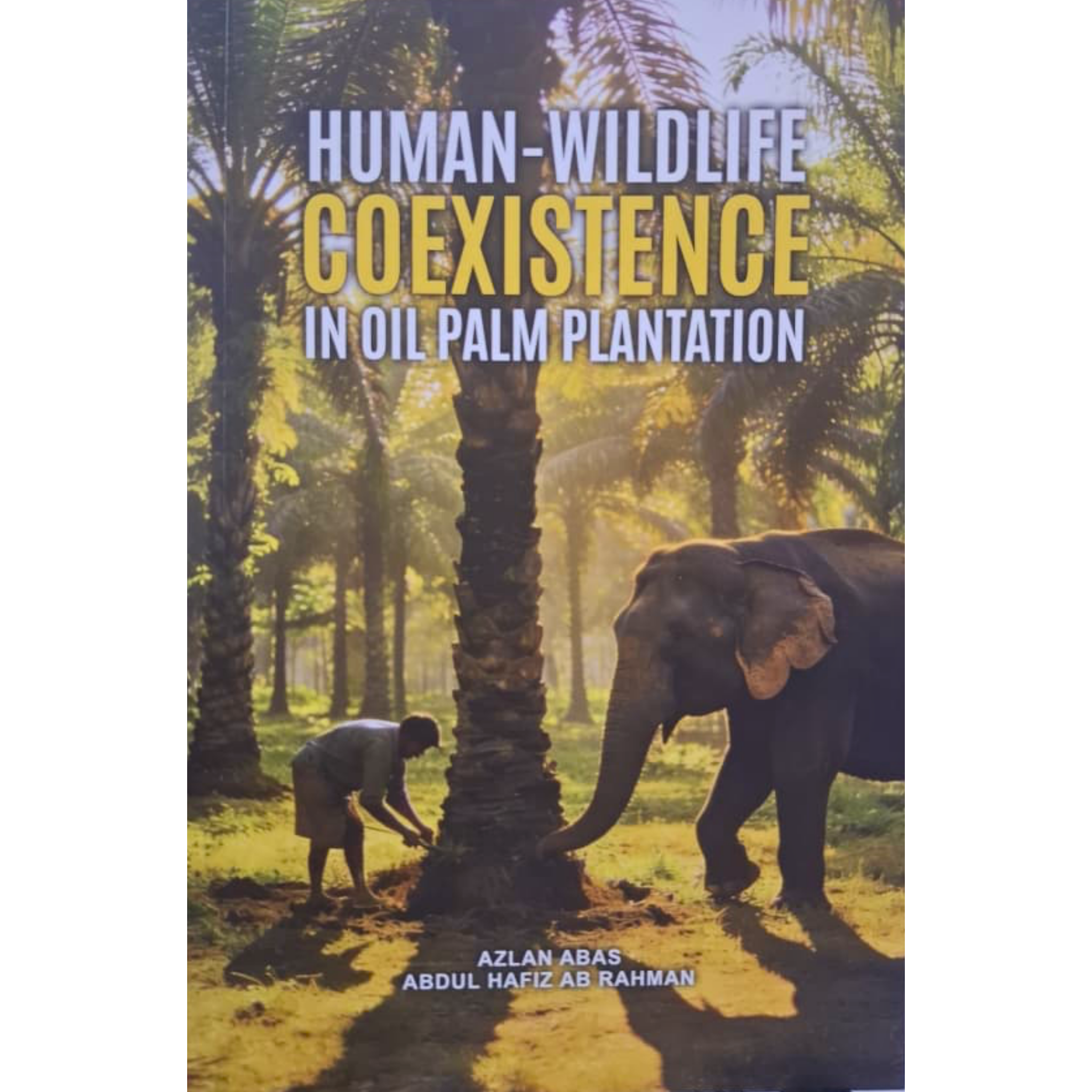
Human-Wildlife Coexistence in Oil Palm Plantation
- Regular price
- RM 30.00
- Sale price
- RM 30.00
- Regular price
-
RM 30.00



Share
Human-Wildlife Coexistence in Oil Palm Plantation
Author: Azlan Abas & Abdul Hafiz Ab Rahman
Publisher: UKM Press
Format: Paperback
ISBN: 9786294866829
Pages: 287p
Weight: 527g
Year: 2026
Price: RM30
As global demand for palm oil continues to rise, vast tropical landscapes are being transformed into oil palm plantations bringing profound ecological and socia! consequences. Human-Wildlife Coexistence in 0il Palm Plantation explores one of the most pressing yet understudied challenges emerging from this transformation: the increasingly complex relationship between people and wildlife in agricultural landscapes. Drawing on ecological research, policy analysis, and real-world case studies, this book examines how plantation expansion reshapes habitats, fragments ecosystems, and forces wildlife such as elephants, orangutans, and other species to interact more frequently with human communities. These interactions often lead to conflict crop damage, threats to livelihoods, and risks tc both human safety and wildlife survival. Moving beyond problem diagnosis, the book also highlights practical pathways toward coexistence. It discusses innovative mitigation strategies, including wildlife corridors, community participation, sustainable plantation management, and evolving policy frameworks such as sustainable palm oil certification. Through interdisciplinary insights, t demonstrates how ecological understanding, governance reforms and community-based approaches can collectively reduce conflict while supportinc biodiversity conservation. Bridging environmental science, conservation policy. and socio-ecological perspectives, this book provides an essential resource fol researchers, policymakers, plantation managers, and students interested in sustainable agriculture and wildlife conservation. Ilt ultimately asks a critica guestion: Can oil palm landscapes be redesigned to support both economic development and the survival of wildlife?